Yeast Infections and Chinese Medicine: Causes, Herbs, and Prevention
By Eduardo Velasco Valido, AP, LAc
· Reading time: ~9 min
Yeast infections are common — up to 3 in 4 women get a vaginal one at some point — and many reach for natural options instead of repeated antifungals. Chinese medicine takes a different route: it reads the infection as Damp Heat, a mix of congestion and inflammation rooted in gut imbalance, and treats the whole pattern rather than just the itch. Here's the TCM view, the herbs studied against candida, and how to prevent recurrence.

What Yeast Infections Are
A yeast infection is a fungal overgrowth of Candida albicans, a yeast normally present on the body. When bacteria and yeast fall out of balance, Candida multiplies out of control. It affects the mouth, throat, genitals, and skin folds; vaginal infection is the most common.
Symptoms: itching, burning, soreness, discharge, pain during sex, vulvar redness and swelling. In TCM's reading the root sits in the gut — the infection is a surface sign of a deeper imbalance.
The TCM View: Damp Heat in the Liver Channel
Damp Heat is a TCM pattern: dampness (congestion, heaviness, fluid) plus heat (inflammation, infection). It's the classic label for fungal overgrowth and can surface on skin, genitals, gut, and respiratory tract.
The classic literature is more specific than "Damp Heat" alone. The root is usually Liver Channel Damp-Heat, often from emotional stress and a Spleen too weak to transform fluids — the Liver's free flow jams, dampness pools, and heat festers. That's why the itch, the discharge, and the irritability tend to arrive together.
On qi: TCM frames health as balanced qi — the body's functional activity. Infection is qi and fluid balance disrupted, not a lone bug to kill.

Patterns
TCM treats the pattern, not the diagnosis. The two seen with candida are opposites:
Damp Heat — itching, burning, thick yellow discharge, red tongue with greasy coating, rapid slippery pulse. Bitter-cold herbs clear it.
Damp Cold — thin white discharge, cold limbs, fatigue, pale tongue. Warming herbs such as She Chuang Zi fit.Getting this wrong makes things worse — cold herbs on a cold pattern deepen it. That's the case for a practitioner over a guess.
Diagnosis
Diagnosis runs on the Eight Principles — sorting symptoms by interior/exterior, cold/heat, deficiency/excess, yin/yang. The practitioner reviews symptoms, takes the pulse, and observes the tongue and ears. Damp Heat shows a red or thickly coated tongue and a rapid or slippery pulse.
Ancient practitioners didn't know yeast existed; they identified the Damp-Heat pattern and treated it effectively with herbs.
Key Chinese Herbs (Internal)
Several herbs are studied against candida — one screen of 163 TCM extracts found antifungal activity across species, and a formula study detailed action against Candida. Doses below are typical adult dried-herb ranges; a practitioner adjusts them.
Huang Bai (Phellodendron bark)
Bitter, cold. Clears Damp Heat; used for vaginal infection on its own antifungal and antibacterial strength.
Typical dose: 6–12 g decocted.
Caution: very cold — avoid in cold/deficient patterns; care in pregnancy.
Ku Shen (Sophora root)
Very bitter, very cold, descending. Expels wind, stops itching, promotes urination — a standard for fungal infection from excess Damp Heat, notably effective vaginally.
Typical dose: 6–12 g internal; also used in wash.
Caution: bitter-cold, hard on the Stomach; avoid long-term.
Bai Tou Weng (Pulsatilla root)
Clears Damp Heat; used for discharge and itching.
Typical dose: 6–15 g.
Caution: cold; large doses can irritate the gut.
Huang Qin (Scutellaria root)
Bitter, cold; clears heat and dries dampness in formula.
Typical dose: 6–12 g.
Caution: cold; avoid in deficiency-cold.
Yi Yi Ren (Job's tears)
Strengthens the Spleen and drains Dampness — for damp-dominant patterns.
Typical dose: 15–30 g.
Caution: generally mild; avoid in pregnancy in large doses.
She Chuang Zi (Cnidium fruit)
Acrid, bitter, warm. Warms the Kidneys, assists Yang, expels wind, dries dampness, kills parasites — the Damp Cold choice.
Typical dose: 3–10 g internal; common in washes.
Caution: warming — wrong for hot patterns.
Berberine
A compound in coptis, barberry, goldenseal. Antimicrobial; inhibits yeast growth, reduces inflammation, supports immunity.
Typical dose: follows the herb (e.g. Huang Lian); standardized extracts vary.
Caution: not for long-term use; care in pregnancy.
Garlic carries antifungal compounds and immune support — food as much as medicine.
External Washes and Sitz Baths
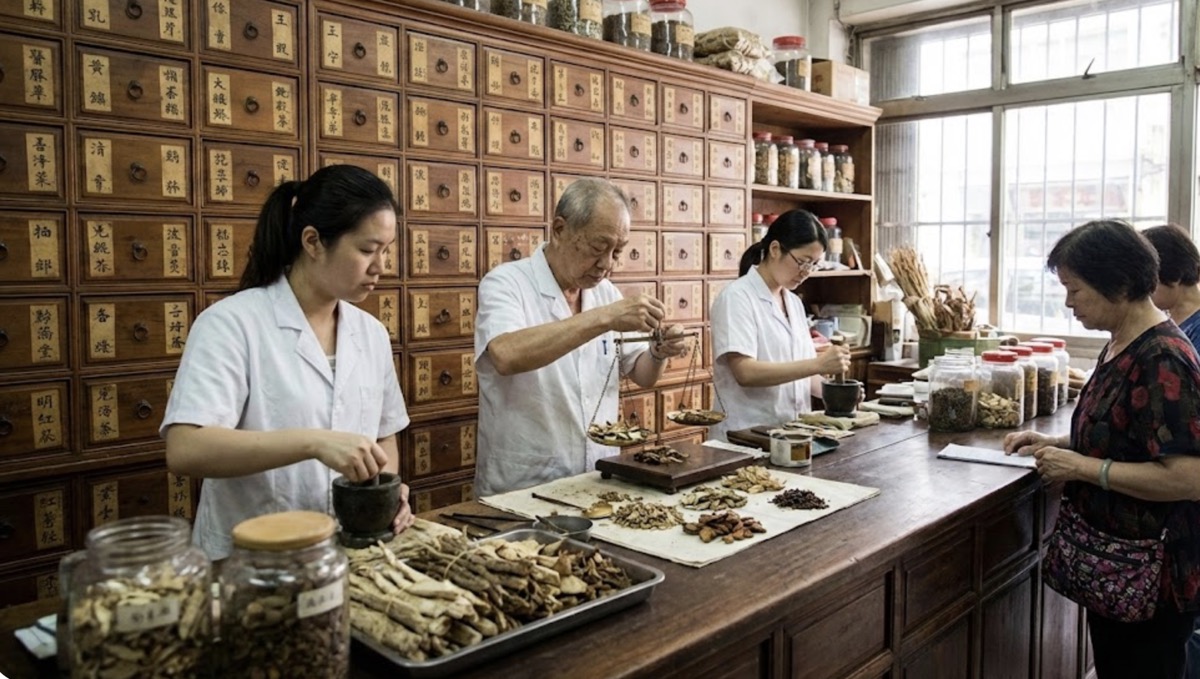
This is standard TCM practice and the best-evidenced part — herbal washes, not just pills.
Randomized trials of herbal washes with Ku Shen, She Chuang Zi, and Huang Bo cut itching and discharge about as well as antifungal drugs, with fewer side effects. Fumigation and washing are routine in gynecology. A wash reaches tissue directly, which is why it works fast on acute itch.
Typical method: a decoction of Ku Shen, She Chuang Zi, and Huang Bo (roughly equal parts), simmered 20–30 minutes, strained, and used warm as a sitz bath or douche for 10–15 minutes once or twice daily, often alongside internal herbs. Not during menstruation; external use only.
Named Formulas
Classic formulas exist for specific patterns — another reason to see a practitioner:
- Long Dan Xie Gan Tang — drains Liver-Gallbladder Damp Heat; the workhorse for acute, angry, itchy cases.
- Zhi Bai Di Huang Wan — for Damp Heat with underlying Kidney yin deficiency.
- Wan Dai Tang — for Damp Cold with thin white discharge.
- Modified Zhi Dai Tang — studied for recurrent cases.
Acupuncture
Acupuncture inserts fine needles at points to stimulate healing. Points used in the sources include SP-6, SP-9, ST-36, KI-3, BL-23, and UB-34 — Spleen and Kidney points to transform dampness and strengthen the root, plus lower-abdomen points locally. The aim is to rebalance qi, reduce inflammation, and support immunity. Best alongside herbs and diet.
Pregnancy and Postpartum
Strong bitter-cold herbs are used with care in pregnancy; milder formulas and external washes are preferred. Recurrent infection in pregnancy is common and worth treating rather than enduring — but tell your practitioner you're pregnant so the formula is adjusted. Don't self-prescribe Huang Bai or Ku Shen in pregnancy without guidance.
Prevention
Keep Damp Heat from forming.
Diet
Avoid what feeds dampness: sugar, alcohol, refined and processed food, greasy and spicy dishes, cheese, yeast-containing foods, excess soy. Favor cooling, draining foods: green vegetables, grains, mung beans, barley, dandelion, beet and carrot tops, garlic, rice vinegar, citrus. Probiotics like yogurt and kefir support flora. Keep fruit modest — sugar feeds yeast.
Lifestyle
Loose cotton over tight synthetics. Keep the area clean and dry, especially after exercise or swimming. Manage stress — it weakens immunity and jams the Liver.
TCM vs Western Medicine
Western care uses antifungals like fluconazole — fast and effective, but with side effects like nausea and headache, and repeated courses can wear on beneficial bacteria.
TCM strengthens the body so it clears the infection without flattening good bacteria, and individualizes to the pattern. The honest read: antifungals give quicker relief; TCM aims at recurrence and terrain. Most do best with both — and should tell their provider about any herbs.
The Evidence — and Its Limits
Lab and formula studies show TCM herbs have real antifungal activity — including the 163-extract screen and the Cao Huang Gui Xiang formula study, plus the human wash trials above.
The limit: most of this is laboratory or formula work, not large clinical trials of TCM for vaginal yeast infection in patients. The wash trials are the strongest human evidence. So treat herbs as promising and well-traditioned, not proven the way a drug trial proves things.
Antifungal mechanisms of Cao Huang Gui Xiang against Candida: https://www.ncbi.nlm.nih.gov/pmc/articles/PMC8959912/
In vitro antifungal activity of 163 TCM herb extracts: https://www.sciencedirect.com/science/article/abs/pii/S1876382020313949
FAQ
- Can Chinese medicine treat a yeast infection?
Yes — herbs, washes, acupuncture, and diet target the Damp Heat behind it. Best alongside medical care for an active infection.
- Which herbs are used?
Huang Bai, Ku Shen, Bai Tou Weng, Huang Qin, Yi Yi Ren, She Chuang Zi, berberine — several show antifungal activity in lab studies.
- What is Damp Heat?
A pattern of congestion plus inflammation — the classic reading of fungal overgrowth, usually rooted in Liver Channel Damp Heat.
- How is it diagnosed?
By pattern: symptoms, pulse, and tongue through the Eight Principles.Are washes better than pills?
They reach tissue directly and act fast on itch — the best-evidenced TCM method here.
- Is it safe in pregnancy?
Generally, with milder formulas and external washes; tell your practitioner.
- Can it prevent recurrence?
That's the aim — strengthening the terrain so yeast stops returning.
Conclusion
Chinese medicine is a strong option for chronic, recurring yeast infections and for prevention. Herbs, washes, and acupuncture clear the damp-heat terrain and strengthen immunity without the toll of repeated antifungals.
Visit us at Soul Acupuncture & Herbal to see what Chinese medicine can do for you.
This article is meant to educate, not to diagnose or treat. Always contact your primary care provider.