The 12 Meridians in Chinese Medicine: Pathways and Points
By Eduardo Velasco Valido, AP, LAc
Reading time: ~10 min
Meridians — Jing Mai in Chinese — are the vessel system described in the Nei Jing, the oldest Chinese medicine text. Twelve principal meridians run longitudinally, three on each arm and leg, interconnecting the whole body and carrying qi, blood, nutrients, and oxygen. TCM described circulation as fundamental at least 1,500 years before Europe did — and, contrary to its esoteric reputation, it rests on anatomy and physiology. Here are the twelve meridians, their pathways, and their points.
What Meridians Are
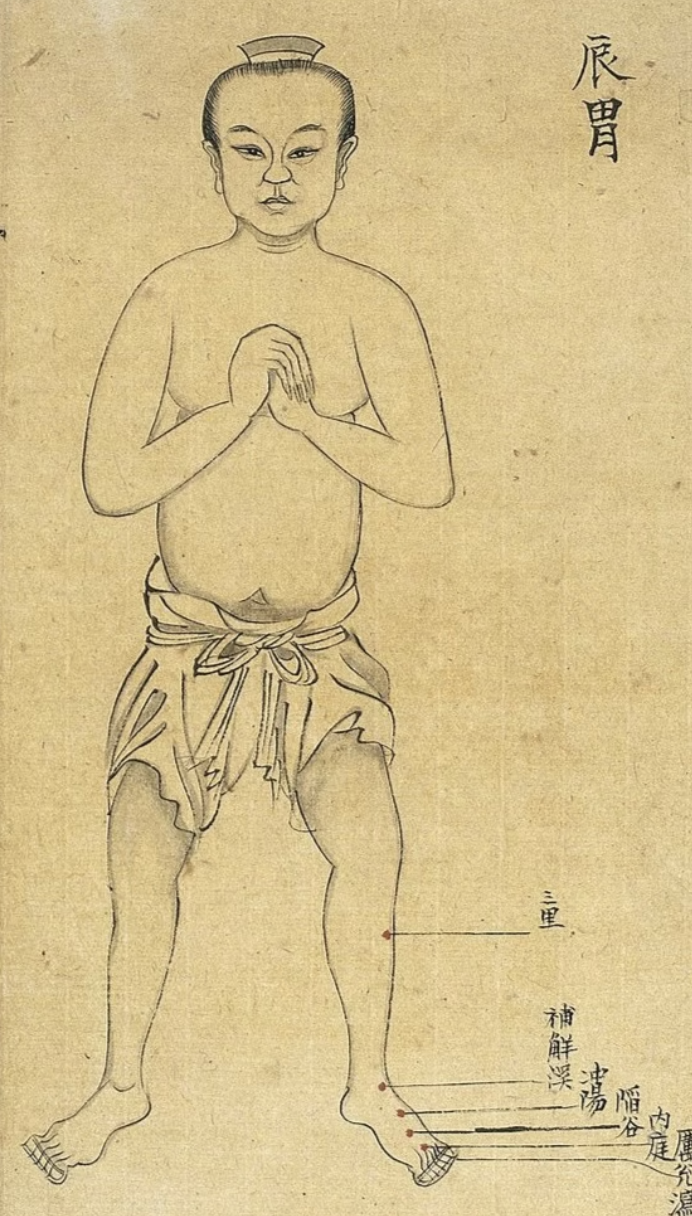
Jing Mai (經脈) is the term used in the Huang Di Nei Jing — the "Yellow Emperor's Classic of Internal Medicine," the oldest and most important TCM text — for the body's circulatory vessels. The word is often translated as blood vessel; many modern translators prefer channel, since mai alone can mean pulse or vessel. The blood-vessel reading is a position within translation, not a settled consensus — but it's well grounded in the text.
Either way, the point stands: the Nei Jing describes a circulation system roughly 2,200 years ago.
What is qi? Qi is the body's functional activity and vital capacity — the energy and material that let organs work, blood move, and tissue repair. Meridians are said to carry it, along with blood and nutrients.
A note on the "esoteric" reputation. The idea that TCM is purely energetic and mystical traces largely to the 1939 translation by Soulie de Morant, a French consul, whose rendering pushed an energetic reading. The Nei Jing itself is physiological and anatomical — as the pathways below show.
The Significance of Meridians
Jing Mai means blood vessel, and the Huang Di Nei Jing uses it to define circulation in the human body.
Meridian theory is a foundation of TCM: built over millennia of clinical practice, it maps Yin and Yang meridians and their acupuncture points into a system used to diagnose and treat almost any imbalance.
TCM aims to restore whole-body function through meridian stimulation — acupuncture, herbal medicine, nutrition, and qi gong.
Once equilibrium returns, health returns.
In practice, the meridian system underpins diagnosis: disruptions in flow are read as the root of illness, and treatment works to restore balance.
The Three Pillars of TCM Theory
Meridian theory sits within three foundational pillars:
1. Yin-Yang and the Five Elements. An analytic lens for natural law and its effect on the body — seasons, day and night, birth and death. (Its own article is planned.)
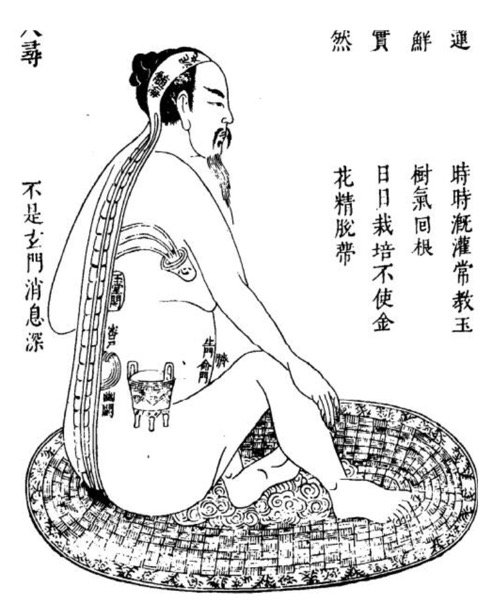
2. Zang-Fu organ theory. Zang are the Heart, Kidney, Spleen, Liver, and Lung; Fu are the Gallbladder, Small Intestine, Stomach, Large Intestine, and Bladder. The organs sit inside, but their activity shows on the exterior — so face, ears, tongue, and pulse reveal what's happening within.
3. Meridians and collaterals. The meridians form a network linking all organs, the body surface, and the environment. They let the body work as one responsive unit. They also carry qi, blood, oxygen, and information, and — importantly — are where external pathogens enter: Yang meridians first, Yin if disease goes deeper.
All primary meridians connect to acupuncture points, used for both diagnosis and treatment.
The Pathways of the Twelve Major Meridians
Twelve principal meridians exist — six Yin, six Yang — plus eight extraordinary vessels (not covered here). Each has its own points and pathway.
1. Lung Meridian (LU)
Governs respiratory health and immunity. Runs from the chest down the inner arm to the thumb. A branch at LU 7 links to the Large Intestine channel at LI 1 (index fingertip).
See how this meridian is used in practice: acupuncture for sinus relief.
2. Large Intestine Meridian (LI)
Linked to digestion and elimination. Runs from the index finger up the arm to the face. At LI 20 it connects to the Stomach meridian.
3. Stomach Meridian (ST)
Influences digestion and energy. Runs from the face down through chest and abdomen to the thigh, ending at the outer tip of the second toe (ST 45). At ST 42 it connects to the Spleen meridian.
4. Spleen Meridian (SP)
Associated with digestion and blood circulation. Runs from the big toe up the inner leg to the chest. Connects with the Stomach organ; a branch reaches the tongue and links to the Heart meridian.
5. Heart Meridian (HT)
Governs emotional well-being and circulation. Runs from the chest down the inner arm to the little finger. Branches connect to the eyes, lungs, and small intestine.
See how this meridian is used in practice: purple feet and circulation.
6. Small Intestine Meridian (SI)
Plays a role in digestion and nutrient absorption. Runs from the little finger up the arm to the face. Connects to the Bladder meridian at the inner corner of the eye.
7. Bladder Meridian (BL)
Linked to urinary function and waste elimination. Runs from the occiput down the back to the sacrum, then down the legs to the outer little toe. Connects with the Kidney.
8. Kidney Meridian (KI)
Vital for reproductive health and energy. Starts at the foot, runs up the inner leg, and curves around the abdomen. Connects to the Lung, then to the Pericardium.
See how this meridian is used in practice: oxalate dumping.
9. Pericardium Meridian (PC)
Influences heart health and emotional balance. Runs from the chest down the arm to the middle finger. A branch from the center of the palm runs to the ring finger, linking to the Triple Burner meridian.
10. Triple Burner Meridian (TB)
Regulates body temperature and metabolism. Follows a unique path affecting multiple organs. Branches reach the eyes and ears; at the outer eye corner it connects to the Gallbladder meridian.
11. Gallbladder Meridian (GB)
Associated with digestion and decision-making. Runs from the head down the sides of the body to the foot. From GB 41 it connects toward the big toe and the Liver channel.
12. Liver Meridian (LR)
Influences detoxification and emotional health. Runs from the foot up the leg to the chest, through the genitals and stomach, then connects to the Lung — where the circadian cycle begins again.
Balancing Meridians for Health
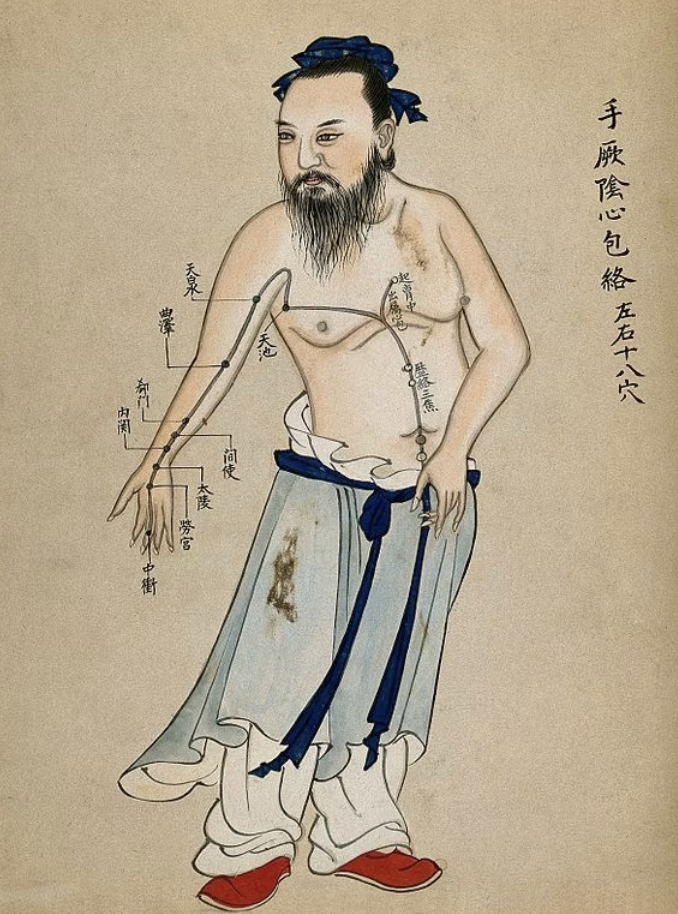
TCM practitioners use several methods to restore flow in the meridians.
Acupuncture inserts fine needles at specific points along the meridians to stimulate blood flow and healing — working largely through the nervous system.
Herbal remedies, dietary change, bodywork, and lifestyle shifts address imbalance in the meridian system too.
The aim is never a single symptom — it's the whole pattern, so the body can return to equilibrium.
FAQ
- What are the 12 meridians?
Six Yin and six Yang channels running along the arms and legs, each linked to an organ and its points — the core map of TCM diagnosis and treatment.
- How many meridians are there?
Twelve principal meridians, plus eight extraordinary vessels.
- What is Jing Mai?
The Chinese term for the meridian vessels, from the Huang Di Nei Jing. It's often translated "blood vessel," though many now use "channel."
- Is TCM esoteric or anatomical?
Anatomical and physiological. The Nei Jing describes a real circulation system; the "purely energetic" image traces largely to a 1939 mistranslation.
- What is qi?
The body's functional activity and vital capacity — what lets organs work and blood move. Not a mystical force.
- How are meridians used in treatment?
Through acupuncture points on the channels, plus herbs, diet, and bodywork, to restore balance.
- Can you treat a specific organ through its meridian?
TCM treats the pattern the meridian reveals, not the organ in isolation — the whole system is adjusted together.
Conclusion
TCM has a history of nearly 4,000 years. Most people assume it's energetic and esoteric; it's actually built on anatomy and physiology, like Western medicine. The meridians are central to both its theory and its practice — used to treat the whole body through acupuncture points, and used to diagnose.
To learn more about treatment, visit our acupuncture page.
Curious how meridian theory applies to you? Contact Soul Acupuncture & Herbal.
This article is meant to educate, not to diagnose or treat. Always contact your primary care provider.