Plantar Fasciitis Acupuncture:
A Natural Solution to Heel Pain
By Eduardo Velasco Valido, AP, LAc
Reading time: ~9 min
Have you ever felt a sharp pain in your heel that makes it hard to walk or stand? That's plantar fasciitis — the most common cause of heel pain. Acupuncture and Chinese herbs clear the meridian obstruction behind it, reduce inflammation, and restore tissue health. We also combine treatment with SoftWave shockwave therapy, a proven needle-free adjunct that accelerates healing of the plantar fascia.
In this article, we'll explore how acupuncture works for plantar fasciitis, the TCM patterns behind it, and what you can expect from treatment.

What Is Plantar Fasciitis?
Plantar fasciitis is the most common cause of heel pain, affecting athletes, active people, and anyone on their feet for long hours.
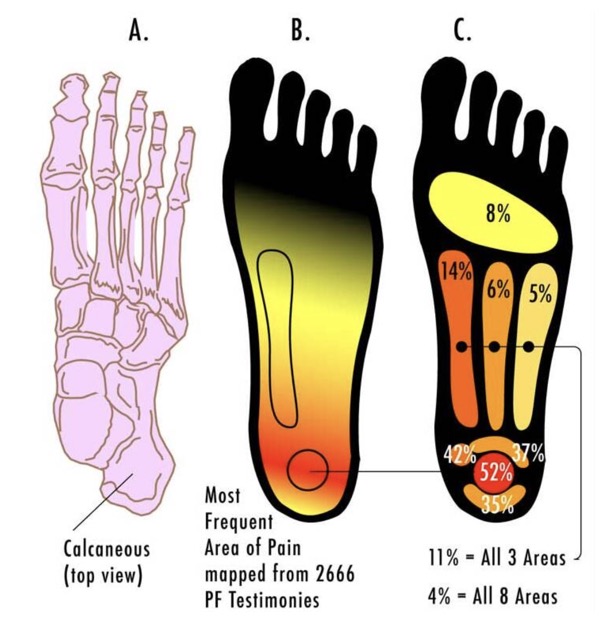
It is caused by inflammation of the plantar fascia — the thick band of tissue that runs along the bottom of the foot and connects your heel bone (calcaneus) to your toes.
The injury usually develops from microtears in the fascia at or near where it attaches to the heel bone, and it is frequently associated with a calcaneal heel spur.
Common causes and risk factors:
- Repetitive stress — increasing running mileage, hills, or speed
- Excessive pronation, leg-length discrepancy, or high/low arches
- Prolonged standing or poor arch support in footwear
- Sudden changes in activity levelIncreased body weight (a major risk factor)
Pressure applied near the middle of the heel — or the plantar surface of the foot — typically reproduces the pain.
Who Is Affected by Plantar Fasciitis?
Plantar fasciitis is common among runners — accounting for up to 10% of all running-related injuries — but it can affect anyone with repetitive strain or overuse.
Studies show that obesity significantly increases risk, with up to 40% of male and 90% of female patients affected. Acute trauma during strenuous lower-extremity activity can also trigger it.
In short: runners, walkers, people who stand all day (nurses, teachers, retail, factory workers), and people carrying extra weight are the highest-risk groups.
Typical Symptoms
Sharp pain on the underside of the heelHeel pain that extends toward the metatarsal headsStiffness on the plantar side of the foot
Worst pain on the first steps in the morning, or after long rest/sittingPain eases after warming up, then returns after a period of restIf this pattern sounds familiar, it is highly characteristic of plantar fasciitis.
Western Medicine Treatment
Common conventional approaches include:
- Anti-inflammatories (ibuprofen, naproxen) — effective, but long-term use can cause stomach ulcers and GI bleeding.
- Stretching — tight calf muscles often worsen heel pain; targeted calf stretching helps.
- Physical therapy — massage, ultrasound, taping, and strengthening.
- Steroid injections — usually effective, though some studies link them to plantar fascia rupture.
- Activity modification — reducing the aggravating load.
Each has a role, but each also has limits. This is where acupuncture, Chinese herbs, and SoftWave fit in.
What Is Plantar Fasciitis in Traditional Chinese Medicine?
In TCM, plantar fasciitis and heel pain are classified as Bi Syndrome — a painful obstruction of Qi and Blood in the meridians and collaterals.
Bi Syndrome arises when pathogenic Wind, Cold, and Dampness, or Damp-Heat, invade the channels; or from Qi & Blood Stagnation; or from Kidney and Liver Jing-Essence Deficiency.
The result is obstruction, and obstruction produces pain.TCM does not treat the label "plantar fasciitis" — it treats the pattern behind it.
Once the pattern is corrected, the pain resolves. Below are the four most common patterns and their treatment protocols.
Treatment by Pattern
1. Wind, Cold & Damp
Plain language: cold, heavy, weather-sensitive pain.
Signs: feeling cold, heavy sensation in the foot, relief with heat and dry weather, cold limbs, clear urine, no thirst, poor appetite.
Acupuncture:
SJ 5 + LI 4 — expel external Cold, Wind, and Dampness
Kid 3 — expels Cold, warms the channels
Sp 6 — promotes blood flow, eliminates Dampness
Sp 9 — reduces inflammation, Dampness, swelling; moves Qi
Herbs:
Juan Bi Tang or Jing Fang Bai Du Pian can provide strong pain relief when the pattern is correct.
2. Damp-Heat
Plain language: hot, swollen, red pain that feels better in cold weather.
Signs: redness, swelling, relief in cold weather, bitter taste, poor appetite, loose foul-smelling stools, heavy legs.
Acupuncture:
SI 4 + BL 4 — drain Dampness through urination
Sp 9 + GB 34 — eliminate Damp-Heat in the lower jiao, relieve pain
Kid 2 — clears Heat and Dampness
LI 4 + Liv 3 — reduce heel pain
Sp 10 — cools the Blood, reduces redness
Herbs:
Si Miao Wan clears Heat and resolves Dampness in the lower leg and feet.
3. Qi & Blood Stagnation
Plain language: sharp, stabbing, fixed pain — often after injury.
Signs: history of trauma or repetitive heel injury, stabbing pain in a fixed location, worse at night, rigid joints.
Acupuncture:
LI 4 + Liv 3 — strongly move Qi, eliminate stagnation, relieve pain
GB 34 — strengthens tendons, reduces pain
GB 39 + Kid 3 — tonify Kidney, strengthen bones
Sp 6 — tonifies Yin and Blood
BL 60 — relieves heel pain
Herbs:
Fu Yuan Huo Xue Tang moves Blood, dispels stasis, spreads Liver Qi, and opens the channels — effective when pain is excruciating.
4. Kidney & Liver Jing-Essence Deficiency
Plain language: chronic, exercise-aggravated pain, often in older patients.
Signs: chronic pain worse with exercise or long standing, lower back pain, weakness, easy fatigue, aversion to cold. Often seen in older patients.
Acupuncture:
Sp 6 — tonifies Spleen, Kidney, and Liver
GB 39 — generates Marrow and Jing
GB 34 — strengthens tendons and bones
St 36 — reinforces Spleen/Stomach, supports Blood production
Liv 3 + Kid 3 — tonify Kidney and Liver, strengthen bones and tendons
Herbs:
Liu Wei Di Huang Wan tonifies Kidney Yin and Jing — useful with deficiency signs like low back weakness, vertigo, tinnitus, and night sweats.
SoftWave: A Powerful Adjunct to Acupuncture
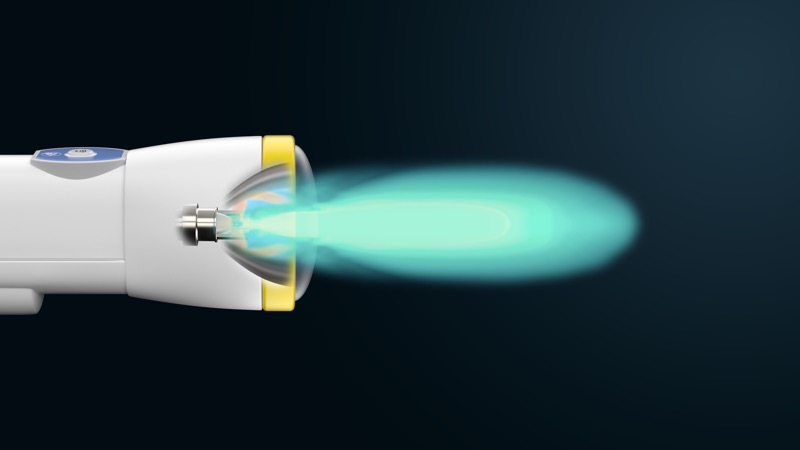
At Soul Acupuncture & Herbal, we combine acupuncture and Chinese herbal medicine with SoftWave — an advanced extracorporeal shockwave therapy (ESWT) platform that accelerates healing of the plantar fascia.
What SoftWave is: SoftWave delivers unfocused, low-energy acoustic (shock) waves into the injured tissue. Unlike older, painful focused shockwave devices, SoftWave is broadly comfortable and typically needs no anesthesia.
How it helps plantar fasciitis:
Stimulates neovascularization (angiogenesis) — brings new blood flow to a poorly-vascularized fascia
Promotes tissue regeneration — supports tenocyte and fascial repair
Modulates substance-P — reduces pain signaling
Breaks down chronic inflammation and micro-scarring — the exact tissue that keeps plantar fasciitis chronic.
This is why SoftWave pairs so well with acupuncture: acupuncture clears the meridian obstruction and calms the nervous system; SoftWave rebuilds the tissue. One treats the pattern, the other repairs the structure.
What to expect: A trained provider applies the device to the heel and plantar surface. Sessions are short, non-invasive, and require no downtime. Most patients are treated in a series, spaced to match tissue-healing time.
Why we use it: Many patients arrive after months of failed NSAIDs, injections, or rest.
Adding SoftWave to their acupuncture plan speeds recovery and gives them a needle-free, drug-free boost that works on the same goal — restoring the foot.
The Evidence: Acupuncture for Heel Pain
You don't have to take our word for it. Peer-reviewed research supports acupuncture for plantar fasciitis and heel pain:
Acupuncture for plantar heel pain (PMC1781596): https://www.ncbi.nlm.nih.gov/pmc/articles/PMC1781596/
Acupuncture reduces plantar heel pain vs. control (PMC3094706): https://www.ncbi.nlm.nih.gov/pmc/articles/PMC3094706/
Acupuncture vs. sham for heel pain (PMID 16734514): https://pubmed.ncbi.nlm.nih.gov/16734514/
Acupuncture may be effective for plantar fasciitis, incl. vs. standard therapy or sham (PMC5311890): https://www.ncbi.nlm.nih.gov/pmc/articles/PMC5311890/
FAQ
How effective is acupuncture for plantar fasciitis?
Research and clinical practice show acupuncture can significantly reduce heel pain and improve function — especially when combined with adjuncts like SoftWave and stretching.
How many sessions will I need?
Most patients need a course of treatments (typically 6–10), spaced weekly. Chronic cases may need longer.
Does acupuncture hurt?
No — most patients feel a mild pinch or nothing at all. Many relax and even fall asleep.
Is SoftWave painful?
No. SoftWave is unfocused and low-energy, so it's generally comfortable and needs no anesthetic.
Can I combine acupuncture and SoftWave?
Yes — this is exactly how we use them together for faster, more complete recovery.
Do you treat runners and athletes?
Yes. We work with runners, walkers, and active patients, plus anyone whose job keeps them on their feet.
Will acupuncture help if I've had it for years?
Chronic cases respond well when the correct TCM pattern is treated — often with SoftWave to address long-standing tissue damage.
Do you use Chinese herbs too?
Yes, when the pattern calls for it. Herbs like Juan Bi Tang, Si Miao Wan, and Liu Wei Di Huang Wan target the specific pattern.
Is it safe with my medications?
Generally yes. Tell us what you take and we'll adjust. Acupuncture and SoftWave are drug-free.
Conclusion
Plantar fasciitis is frustrating and painful — but it is treatable. Acupuncture and Chinese herbs safely relieve pain, reduce inflammation, and promote healing, and for many patients it is life-changing. Combined with SoftWave shockwave therapy and natural adjuncts like stretching, massage, and physical therapy, results improve further.Try it today — contact us at Soul Acupuncture & Herbal.Don't need to believe it — it's proven by science.
This article is meant to educate and not to diagnose or treat. Always contact your primary care provider.